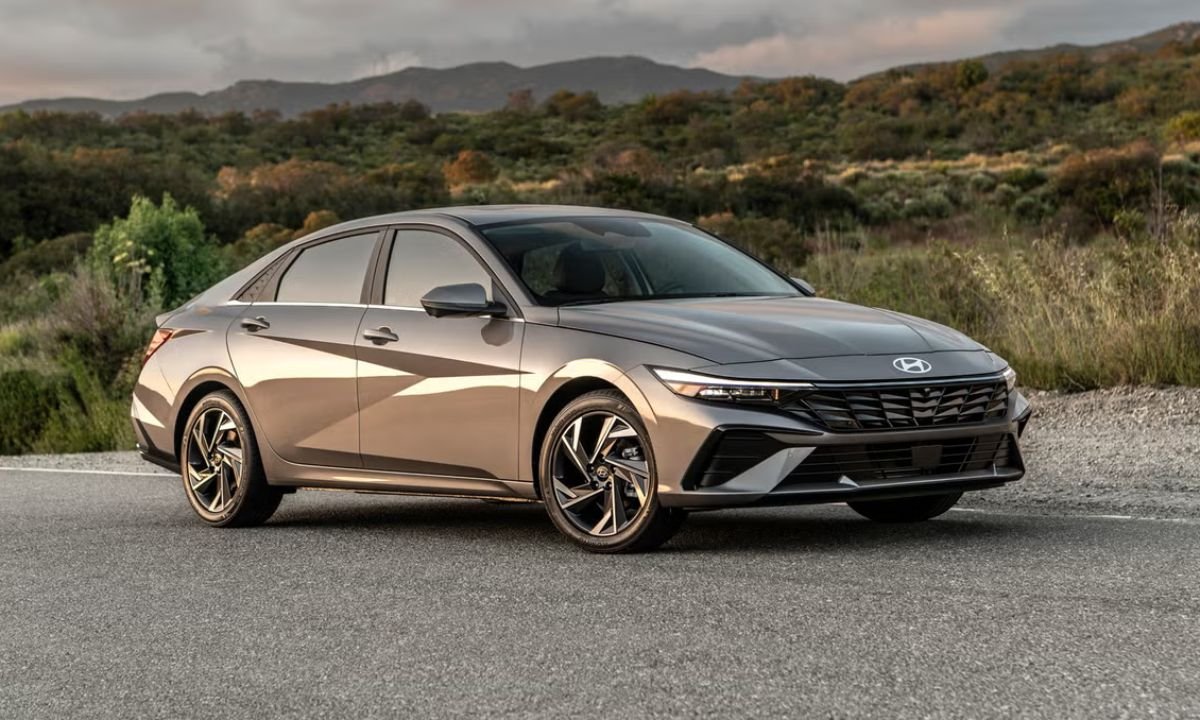
The 2026 Hyundai Elantra remains a well-balanced compact sedan that combines modern design, efficient performance, and advanced in-car technology at a competitive price. It is aimed at buyers who want a feature-rich vehicle with low running costs rather than a pure sports car experience.
Exterior and Interior Design
Hyundai has continued the bold, angular parametric design of the Elantra. The refreshed front and rear fascias appear more aggressive and premium compared to earlier models. The 2026 version features slimmer lights, a wider grille, and smoother body creases that give the sedan a more planted stance on the road.
New wheel designs and additional exterior color options help the car stand out in city traffic and dealership showrooms. The redesigned rear light signature and cleaner bumper styling give it a more premium appearance, similar to Hyundai’s larger sedans.
Inside the cabin, Hyundai focuses on improved quality and practicality. The interior now features softer dashboard materials, upgraded door trims, and updated seat fabrics. The cockpit layout is driver-focused, creating a wrap-around feel for easier access to controls.
Practical touches such as larger storage compartments, better cup holders, and updated USB-C charging ports make the Elantra more convenient for everyday commuting and long drives.
Power and Practicality
Most 2026 Elantra models come with a 2.0-liter inline-four petrol engine producing about 147 hp and 132 lb-ft of torque. The engine is paired with an automatic or CVT-type transmission depending on the market and focuses on efficiency rather than high performance.
This setup provides smooth acceleration for daily driving, with independent tests showing a 0–60 mph time of around 8.4 seconds. Some markets may also offer turbocharged or hybrid variants for buyers who want stronger performance or better fuel economy.
On the road, the Elantra is tuned for comfort. The suspension absorbs bumps effectively while maintaining stability on highways. Light but predictable steering makes the sedan easy to maneuver in tight city streets and parking spaces.
Braking performance and grip are competitive with other compact sedans, helping drivers feel confident during emergency stops and quick lane changes.
Key Technical Specifications
Aspect
2026 Hyundai Elantra (Base Model)
Engine
2.0L Inline-4 Petrol
Power
147 hp @ 6,200 rpm
Torque
132 lb-ft @ 4,500 rpm
Drivetrain
Front-Wheel Drive
0–60 mph
≈ 8.4 seconds
Transmission
Automatic / CVT-type
Hybrid Availability
1.6L Engine + Electric Motor (139 hp combined)
Connectivity, Technology, and Safety
Technology is one of the Elantra’s strongest selling points. Many trims feature a dual-screen layout that includes a digital instrument cluster and a large central touchscreen infotainment system.
The system supports smartphone connectivity, Bluetooth, and various connected services depending on region and trim. Updated infotainment software and intuitive menus make it easy for drivers of all experience levels to use.
Hyundai also equips the Elantra with a range of advanced driver assistance features such as forward collision avoidance, lane-keeping assist, blind-spot monitoring, and automatic high-beam assist.
Rear side airbags are standard across the lineup in many markets, improving passenger safety during side impacts and making the car more appealing for families.
Ownership, Efficiency, and Practical Use
Fuel efficiency remains one of the biggest reasons buyers choose the Elantra. The 2.0-liter engine is tuned for efficiency, and the CVT-style transmission helps keep engine speeds low during normal driving.
The hybrid variant offers even better fuel savings. It pairs a 1.6-liter petrol engine with an electric motor and a 6-speed dual-clutch transmission, delivering smoother gear shifts compared to many CVT-based hybrid systems.
The Elantra also stands out for practicality. Rear-seat space is generous for a compact sedan, and the trunk is large enough for weekend luggage or family trips.
Hyundai’s strong warranty coverage and growing reliability reputation further improve buyer confidence, making the Elantra a sensible long-term vehicle choice.
FAQs
Q1 Is the 2026 Hyundai Elantra a good daily commuter?
Yes. The 2.0-liter engine is tuned for efficiency, and the hybrid version provides even better fuel economy for daily urban commuting.
Q2 Does the 2026 Elantra include modern safety features?
Yes. Depending on the trim and market, it can include lane-keeping assist, forward collision avoidance, blind-spot monitoring, rear side airbags, and automatic high-beam assist.
Q3 Is the Elantra Hybrid enjoyable to drive?
The Elantra Hybrid combines a 1.6-liter engine with an electric motor and a 6-speed dual-clutch transmission, providing smoother and more natural gear changes compared to many CVT-based hybrids.