Beginning in 2026, drivers in the United States will see several important changes related to driver’s licenses, including REAL ID enforcement, digital driver’s licenses, and updated identity verification procedures. Understanding these updates now can help motorists avoid travel disruptions, identification problems, and potential delays.
REAL ID Requirements and Travel in 2026
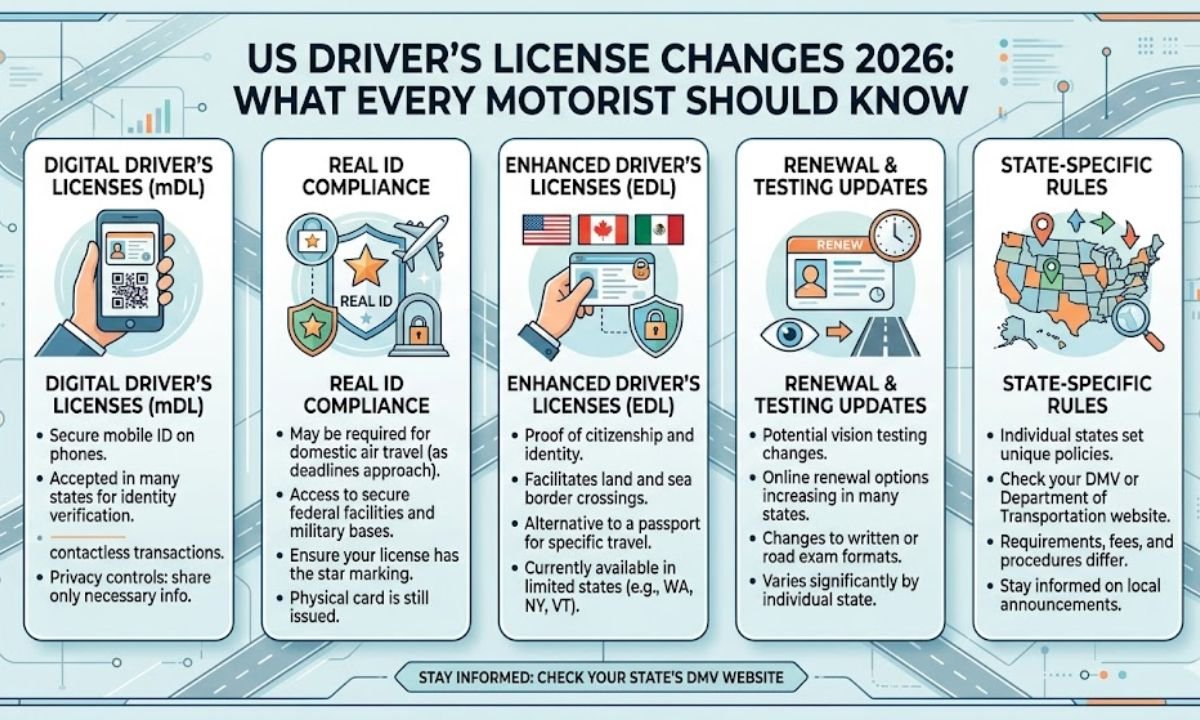
One of the biggest changes for 2026 involves enforcement of the federal REAL ID Act. REAL ID establishes security standards for driver’s licenses and identification cards issued by U.S. states.
REAL ID–compliant identification will be required to board domestic flights and enter certain federal facilities. Enforcement began in phases in 2025, and by 2026 airlines and Transportation Security Administration (TSA) checkpoints are expected to apply these requirements more strictly.
Travelers who present non-compliant identification may face additional identity verification procedures and longer security screening times. To avoid these issues, travelers should obtain a REAL ID–compliant driver’s license or use a valid passport.
The Rise of Digital Driver’s Licenses
Another major development in 2026 is the growing availability of digital driver’s licenses. These mobile IDs allow drivers to store a secure version of their license on a smartphone or smartwatch.
Currently, more than a dozen U.S. states have begun offering digital licenses through mobile wallet systems such as Apple Wallet, Google Wallet, Samsung Wallet, or state-specific mobile ID apps.
Secure encryption protects personal information.
Mobile IDs often require Face ID, fingerprint authentication, or a device PIN.
Some airports and businesses already accept digital identification.
However, digital licenses are not yet accepted everywhere. Many law enforcement agencies and government facilities still require a physical driver’s license, so drivers should continue carrying their physical ID.
Key Driver’s License Changes in 2026
Change
What It Means
Impact on Drivers
REAL ID Enforcement
Stricter ID verification at airports and federal facilities
Travelers without compliant ID may face delays or additional screening
Digital Driver’s Licenses
Mobile IDs available through digital wallets and state apps
Convenient identification option, but physical ID is still recommended
Enhanced Identity Verification
Stronger document checks during license applications
DMVs may require more documentation for new licenses or renewals
Identity Verification and Fraud Protection
The REAL ID Act requires states to follow strict identity verification standards when issuing driver’s licenses. State DMVs must verify documents such as proof of identity, residency, and legal status before issuing a compliant ID.
These security steps are designed to reduce identity theft, prevent fraudulent licenses, and strengthen national security. Drivers are encouraged to review the documentation requirements on their state DMV website before visiting an office.
Safe Driving Guidelines as Vehicle Technology Evolves
Vehicle technology continues to evolve, with more cars offering advanced driver-assistance systems such as lane-keeping assistance and automated driving features. Despite these technological improvements, drivers are still legally responsible for the operation of their vehicles.
Stay alert and avoid distracted driving.
Follow speed limits and traffic laws.
Pay attention to pedestrians and school zones.
Adjust driving behavior for weather and road conditions.
Serious traffic violations can still lead to penalties such as license suspension, increased insurance costs, or mandatory driver education programs.
What Drivers Should Do Before 2026
Preparing for these changes can help drivers avoid delays or complications.
Check whether your driver’s license is REAL ID compliant.
Consider upgrading your license if you plan to travel by air.
Review your state DMV documentation requirements.
If available, enroll in a digital driver’s license program.
Continue carrying your physical driver’s license for identification.
Staying informed about state regulations, license renewals, and safe driving practices will help drivers adapt smoothly to these updates.
FAQs
Q1 Will I need a REAL ID to drive in 2026?
No. A REAL ID is not required to drive. However, it will be required for boarding domestic flights and entering certain federal facilities.
Q2 Are digital driver’s licenses accepted everywhere?
No. Many states and agencies still require a physical license, so drivers should carry their standard ID even if they use a mobile license.
Q3 Will DMV offices be busier in 2026?
Possibly. Increased demand for REAL ID upgrades and additional document verification could lead to longer wait times, so preparing documents in advance can help speed up the process.