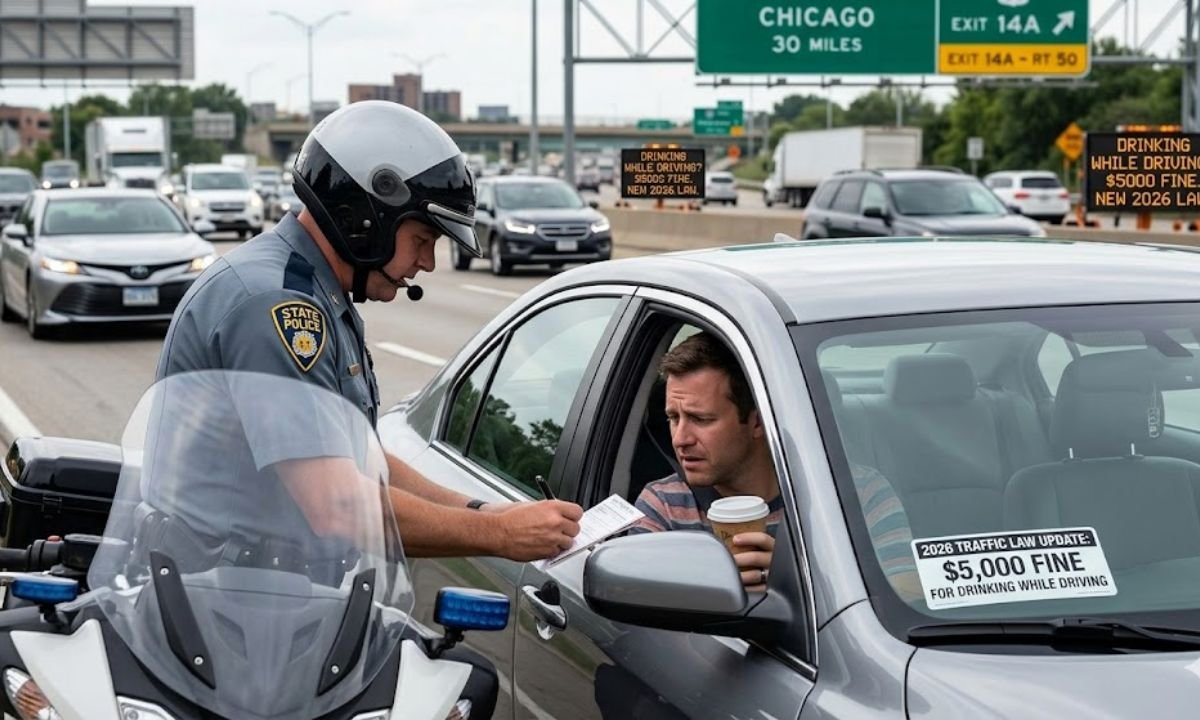
Proposed distracted-driving laws in the United States for 2026 are generating debate among drivers and policymakers. One controversial idea discussed in road safety conversations is the possibility of large fines—sometimes cited as up to $5,000—for behaviors considered serious distractions while driving, including handling drinks. Although drinking non-alcoholic beverages while driving is not currently banned by federal law, discussions around stricter distracted-driving enforcement have raised questions about how such behaviors might be regulated in the future.
Distracted Driving Laws in the United States
Historically, traffic laws in the United States have focused mainly on preventing drunk driving and restricting open containers of alcohol in vehicles. In most states, it is illegal to possess an open alcoholic beverage in the front seat of a vehicle.
However, drinking non-alcoholic beverages such as water, coffee, or soda while driving has generally been treated as a personal choice. Law enforcement may still cite drivers for careless or distracted driving if an action—such as spilling a drink or taking eyes off the road—contributes to unsafe driving behavior or an accident.
Crash data collected over recent years shows that everyday distractions—including eating, drinking, or adjusting devices—can increase the risk of accidents. Because of this, policymakers are increasingly discussing stricter rules aimed at keeping drivers focused on the road.
Road Safety Changes Expected Around 2026
Road safety initiatives for 2026 also include new vehicle technology requirements and stronger enforcement against impaired or distracted driving.
Under federal infrastructure legislation, the National Highway Traffic Safety Administration (NHTSA) is working with automakers to introduce advanced alcohol detection technology in new vehicles. These systems are designed to prevent vehicles from operating if the driver is impaired.
Some states are also experimenting with additional penalties and identification restrictions for repeat drunk-driving offenders, while broader discussions about distracted-driving enforcement continue.
Key Road Safety Trends for 2026
Measure or Trend
What It Means for Drivers
Anti-drunk-driving technology
New vehicles may include systems that detect alcohol impairment and prevent the car from operating.
Tougher sanctions for repeat offenders
Some states are considering stricter identification and monitoring for people convicted of serious drunk-driving offenses.
Focus on everyday distractions
Activities like eating, drinking, or adjusting devices may be considered evidence of distracted driving in crash investigations.
Higher penalties for risky behavior
Serious distracted-driving violations—especially those causing accidents—could lead to large fines and higher insurance costs.
How Distracted Driving Penalties Could Be Applied
Most distracted-driving laws are enforced at the state level. Police officers may cite drivers if they believe an action—such as eating, drinking, or handling objects—caused the driver to lose control of the vehicle or contributed to a crash.
Large fines are typically reserved for aggravated cases, such as:
Driving in a school zone while distracted
Speeding while handling food or beverages
Commercial vehicle violations
Accidents that cause injury or property damage
Insurance companies may also treat distracted-driving violations as high-risk behavior, which could increase premiums for drivers who receive citations.
Safe Driving Habits for 2026
Regardless of specific legal changes, safety experts recommend minimizing distractions while driving.
Avoid eating or drinking while the vehicle is moving.
Keep both hands on the steering wheel whenever possible.
Use rest stops or parking areas for meals or drinks.
Avoid using handheld devices while driving.
Follow speed limits and stay alert to road conditions.
Adopting these habits can help drivers stay compliant with evolving traffic laws and reduce the risk of accidents.
Why Law and Technology Are Shaping Road Safety
Modern road safety strategies combine stricter traffic enforcement with advanced vehicle technology. Governments, automakers, and safety organizations are working together to reduce traffic fatalities and serious injuries.
As new safety technologies and policies emerge, drivers who stay informed and practice responsible driving habits will be better prepared for future changes in traffic regulations.
FAQs
Q1 Is drinking a beverage while driving illegal in the United States?
Drinking non-alcoholic beverages while driving is generally not illegal nationwide. However, drivers can still be cited for distracted or careless driving if their actions lead to unsafe driving behavior.
Q2 Would a proposed $5,000 fine apply only to alcohol?
Discussions about large distracted-driving fines focus on unsafe driving behavior rather than the type of drink. Penalties would likely apply only in serious cases where distraction contributes to a traffic violation or crash.
Q3 How can drivers stay compliant with future traffic laws?
Drivers should avoid distractions such as eating, drinking, or using handheld devices while driving and regularly check their state’s traffic safety laws for updates.