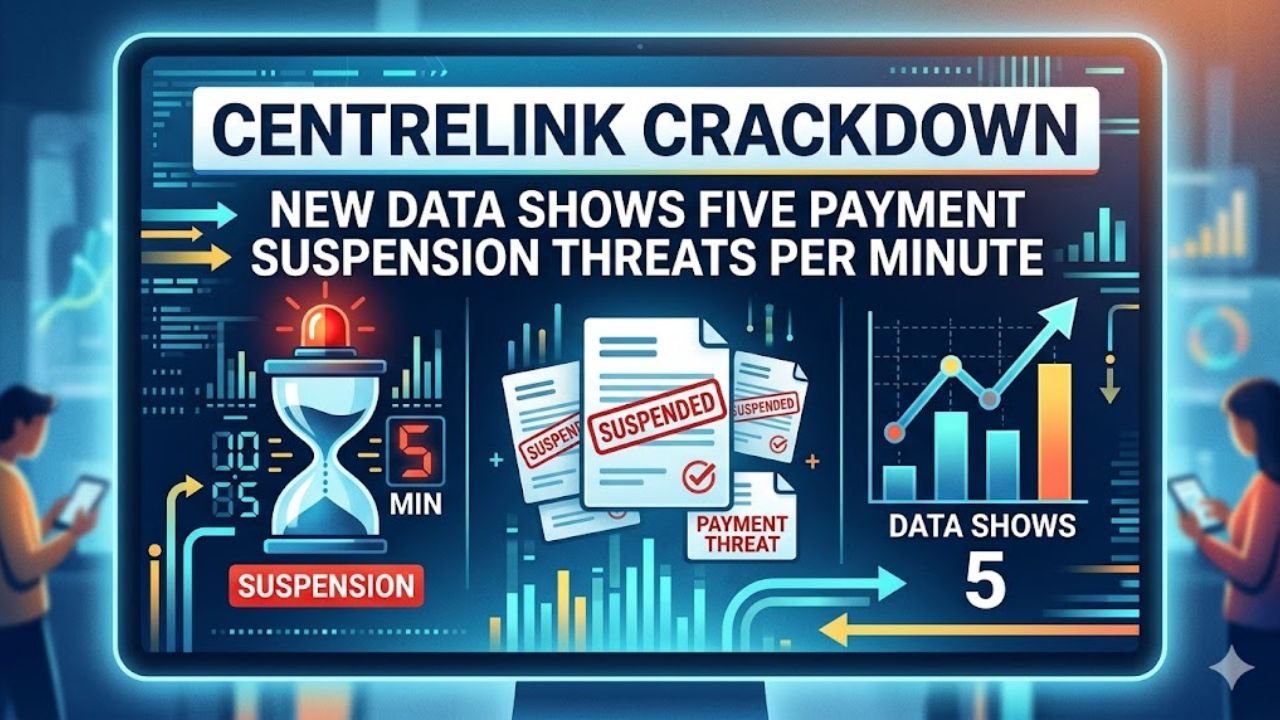
Centrelink has come under renewed scrutiny after data suggested that threats of payment suspension are being issued at an extremely high rate within Australia’s welfare compliance system. According to recent analysis, suspension threats may occur more than five times every minute. The situation has raised concerns among advocacy groups about fairness, transparency, and the stress experienced by people relying on income support payments.
This article explains what the new data reveals, who is most affected by the compliance system, and how welfare recipients can stay informed and protect themselves.
What the Data Shows
Recent analysis found that more than two million compliance reviews and payment suspension actions were issued during a single financial year under Australia’s mutual obligation framework.
In total, approximately 2,683,605 suspension actions were recorded between June 2024 and July 2025. This means that, on average, multiple compliance checks or suspension threats may occur for each welfare recipient during the year.
Many of these suspensions are generated automatically when a person fails to meet mutual obligation requirements, such as attending an appointment with a job provider or reporting job search activities.
Government officials have stated that about 90% of suspensions are resolved before payments are actually stopped. However, advocacy groups argue that the threat alone can create stress and confusion for recipients who must quickly respond to avoid losing income.
Snapshot of the Surge in Suspensions
Indicator
Value / Finding
Source
Total suspension actions (Jun 2024 – Jul 2025)
2,683,605 actions
Antipoverty Centre analysis
Approximate rate
More than 5 suspension threats per minute
Derived from the above period
Main groups impacted
JobSeeker and Disability Support recipients
Advocacy group reports
Proportion lifted before payment loss
About 90%
Government spokesperson comments
Ombudsman concerns
Systemic issues and unlawful cancellations identified
Commonwealth Ombudsman findings
Reasons Behind the Crackdown
The surge in suspension threats is linked to Australia’s mutual obligation system, which requires welfare recipients to actively participate in job search activities or employment programs.
Under these rules, recipients may face compliance action if they:
Miss a scheduled appointment with their job provider
Fail to report job search activities
Do not respond quickly to messages from employment services
Do not participate in required training or work-related activities
Advocacy organisations argue that the system can be difficult to understand, and some people report receiving suspension notices without prior warnings or communication.
The Commonwealth Ombudsman has also raised concerns about systemic issues within the compliance process, including cases of incorrect or unlawful payment cancellations.
Who Is Most Affected?
People receiving JobSeeker Payment and the Disability Support Pension are among those most affected by compliance reviews and suspension threats.
Recipients in remote employment programs and other structured job search schemes may experience repeated compliance checks within a short period of time.
Advocacy groups note that individuals with the following challenges may be particularly vulnerable:
Cognitive or learning disabilities
Mental health conditions
Housing instability or homelessness
Limited access to reliable communication channels
Missing a single message or appointment may trigger a suspension threat, which can cause significant stress and uncertainty.
Impact on Wellbeing and Trust
Community organisations say the rapid pace of compliance actions may increase anxiety among welfare recipients. Even when payments are restored quickly, the fear of losing income can affect mental wellbeing and financial stability.
Advocates also warn that repeated suspension threats may undermine trust in the welfare system, making some people reluctant to seek assistance when they need it most.
Government agencies have said they are working to improve processes by allowing more time for appointments and prioritising cases where payments may actually stop. However, advocacy groups argue that further reforms are needed to ensure fairness.
How to Stay Informed and Protect Yourself
If you receive Centrelink payments, staying informed can help reduce the risk of unexpected suspensions.
Regularly check messages in your myGov account
Ensure your phone number, email, and address are up to date
Keep records of all communications with Centrelink or job providers
Take screenshots of important notices or compliance messages
Contact Centrelink immediately if you receive a suspension warning
If you believe a suspension was issued incorrectly, you have the right to request a review or seek assistance from a community legal service.
Common Questions
Q1 Will I automatically lose my payment if I receive a suspension warning?
No. Government data indicates that most suspension threats are resolved before payments stop, especially if the issue is addressed quickly.
Q2 What should I do if I did not receive a warning before my payment suspension?
You should contact Centrelink or your employment service provider immediately and request a review of the decision if proper communication did not occur.
Q3 Where can I get help challenging a wrongful suspension?
Free assistance is available from community legal centres, social security rights services, disability advocacy organisations, and other welfare support groups across Australia.